Email marketing is still one of the most effective tools in B2B sales and marketing, but the landscape has evolved. What worked a few years ago won’t necessarily cut through crowded inboxes today.
With tighter data regulations, smarter inbox filters, and more demanding audiences, the margin for error is smaller than ever.
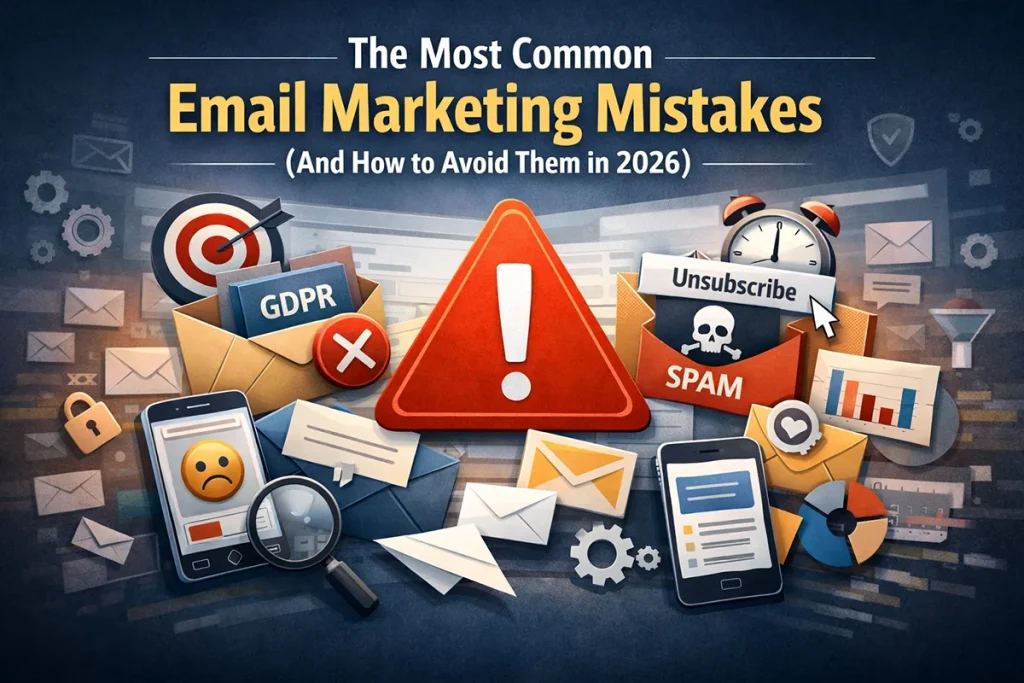
So, if you’re putting time, budget, and effort into campaigns, here are the most common mistakes businesses still make and how to fix them.
1. No Clear Strategy (Still the Biggest Problem)
Too many campaigns start with “let’s send an email” rather than “what are we trying to achieve?” Before you hit send, get clear on:
- Your goal (leads, meetings, sales, awareness).
- Your target audience (be specific not “decision-makers.”)
- Your value proposition (what’s in it for them?)
Modern email marketing isn’t about one-off sends, it’s about joined-up campaigns across email, LinkedIn, calls, and content.
Fix it:
Build campaigns, not emails. Plan messaging, touchpoints, and follow-ups in advance.
2. Poor Data & Lack of Segmentation
If your data isn’t accurate, compliant, or relevant, nothing else matters. And even with good data, sending the same message to everyone? That’s where performance drops off a cliff.
Fix it:
- Segment by industry, role, company size, and intent where possible.
- Keep your data clean, up-to-date, and compliant.
- Tailor messaging to each audience’s specific pain points.
3: Weak (or Generic) Subject Lines
Your subject line has one job: earn the open. If it’s vague, salesy, or overused (“Quick question”, “Just checking in”), it’ll get ignored, or worse, filtered out.
Fix it:
- Keep it short, specific, and relevant.
- Focus on value or curiosity.
- Avoid clickbait, modern filters are smarter than ever.
4. Lack of Real Personalisation
“Hi {{FirstName}}” isn’t personalisation anymore, it’s expected. Modern buyers expect emails that feel relevant to:
- Their role.
- Their industry.
- Their current challenges.
Fix it:
Go beyond names. Reference:
- Their company or sector.
- A likely pain point.
- A relevant use case.
5. Too Many Messages, No Clear Focus
If your email tries to do everything, it usually achieves nothing. Multiple offers, mixed messages, unclear structure, it all dilutes impact.
Fix it:
- Focus on one message, one goal, one CTA.
- Make it obvious what the reader should do next.
6. Ignoring Compliance (A Risk You Can’t Afford)
With regulations like UK GDPR and oversight from the Information Commissioner’s Office, compliance isn’t optional. Using non-compliant data or unclear messaging can:
- Damage your brand
- Reduce campaign performance
- Lead to serious financial penalties
Fix it:
- Ensure you have a lawful basis for contact.
- Be transparent about why you’re reaching out.
- Always provide a clear opt-out.
7. Sending at the Wrong Frequency
There’s a fine line between persistence and annoyance.
- Too few emails = missed opportunities.
- Too many = spam complaints and unsubscribes.
Fix it:
- Plan your cadence in advance.
- Space out follow-ups.
- Focus on adding value, not just “checking in.”
8. Not Testing (or Learning)
Many businesses still send campaigns without testing—and then repeat the same approach regardless of results.
Fix it:
Test things like:
- Subject lines.
- Messaging angles.
- Email formats (plain text vs HTML).
- Send times.
Then optimise based on what actually works.
9. Overlooking Deliverability
Even great emails fail if they never reach the inbox. Spam filters are far more advanced now, and poor practices can quickly damage your sender reputation.
Fix it:
Test things like:
- Avoid sending to outdated or unverified data.
- Warm up domains if needed.
- Keep email lists clean.
- Avoid overly “salesy” language and formatting.
Then optimise based on what actually works.
10. Not Optimising for Mobile
This one hasn’t changed but it’s even more important now. A significant proportion of B2B emails are opened on mobile devices.
Fix it:
- Keep emails short and scannable.
- Use simple formatting.
- Make CTAs easy to click.
11. Ignoring Localisation & Language
If you’re targeting international markets, language still matters a lot. Sending English-only campaigns into non-English-speaking regions will limit engagement.
Fix it:
- Segment by region and language.
- Adapt messaging, don’t just translate it.
12. Not Using Rich Media (Where It Adds Value)
Video, visuals, and interactive elements can boost engagement—but only if used properly.
Fix it:
- Test video or visual content where relevant.
- Keep load times and mobile experience in mind.
- Don’t overcomplicate the email.
Final Thought: Small Mistakes, Big Impact
Most email campaigns don’t fail because of one big issue, fail because of multiple small mistakes stacking up. The good news? Fixing them isn’t about working harder, it’s about working smarter:
- Better data.
- Better targeting.
- Clearer messaging.
- Smarter execution.
Get those right, and email remains one of the highest ROI channels available in B2B.
Talk to us at i-4business to find out how we can help you get the best email data necessary for your business.
Call us on 01252 367400 or email support@i4b.com